
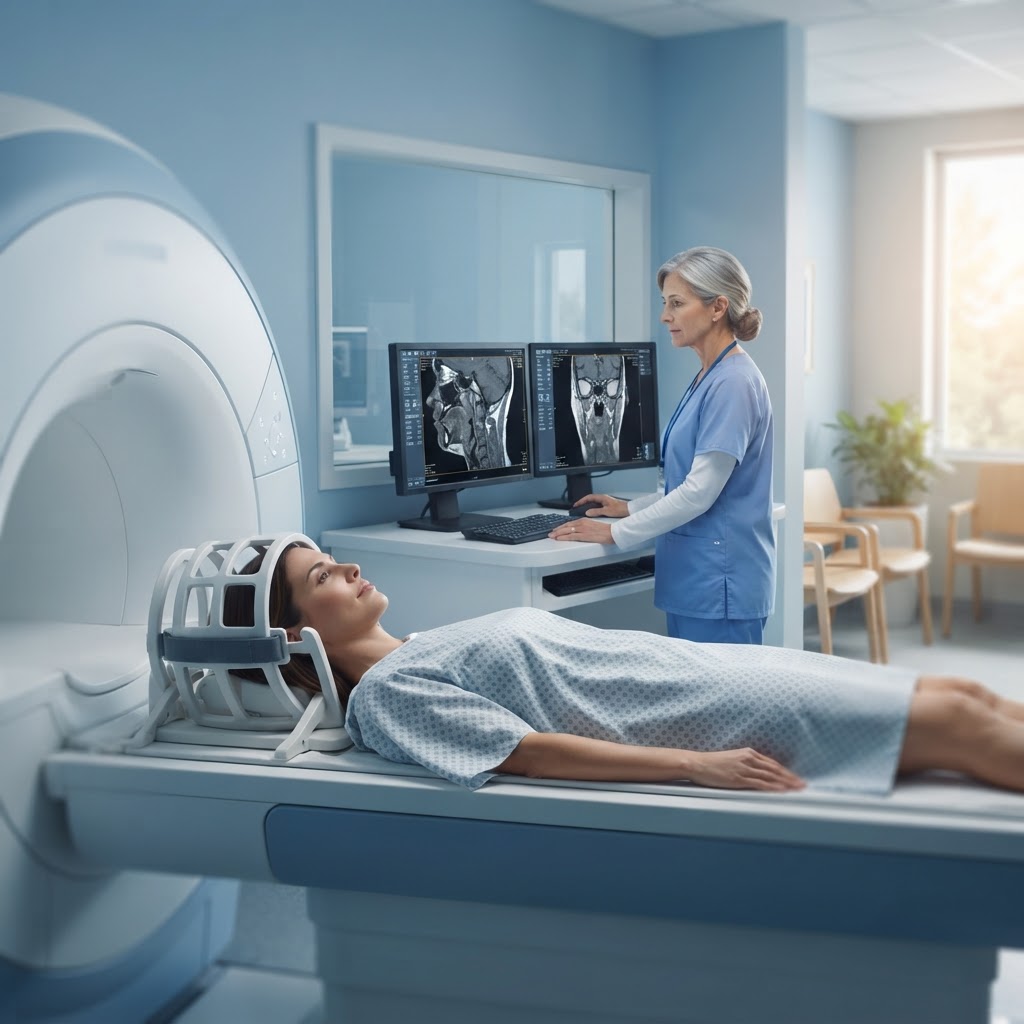
Imaging Orders for Chronic Temporomandibular Joint (TMJ) Dislocation: Diagnostic Considerations
Experiencing persistent jaw pain, clicking, or an inability to open your mouth fully can significantly impact your quality of life. While many people experience temporary jaw soreness, chronic temporomandibular joint (TMJ) dislocation is a complex condition that requires precise imaging to understand the underlying mechanical issues. If you are struggling to get a provider order for the diagnostic imaging you need, Diagnostic Orders Direct (https://diagnosticordersdirect.com) offers $40 virtual provider reviews for imaging and lab order requests when medically appropriate.
Understanding the TMJ: Anatomy and Dislocation
The TMJ acts as a sliding hinge, connecting your jawbone to your skull. When functioning correctly, it allows for smooth movement during talking, chewing, and yawning. However, a TMJ dislocation occurs when the mandibular condyle—the rounded top of the lower jaw—moves out of its normal socket.
While acute dislocation often happens suddenly during a yawn or dental procedure, chronic or recurrent dislocation is a different challenge. In these cases, the ligaments and joint structures become lax or damaged, causing the joint to slip out of place repeatedly. This is distinct from general muscle soreness or myofascial pain, as it involves structural movement of the bone within the joint space.
Why Standard X-rays Are Often Insufficient
Many patients begin their diagnostic journey with a standard dental X-ray. While these are excellent for viewing teeth and jaw alignment, they often fall short when evaluating soft tissue and intricate joint morphology.
- Superimposition: A traditional X-ray captures a 2D image, which can result in structures overlapping and obscuring the joint space.
- Soft Tissue Limitations: X-rays primarily capture bone density. They do not visualize the articular disc, ligaments, or surrounding musculature, which are often the true culprits in chronic TMJ disorders.
- Lack of Depth: Complex surgical planning requires a 3D understanding of how the joint moves and where the condyle sits in relation to the skull base.
The Role of Advanced Imaging: MRI and CT
When standard assessment proves insufficient, high-resolution imaging is the gold standard for diagnosis and surgical planning.
- Magnetic Resonance Imaging (MRI): The preferred method for visualizing soft tissues. An MRI can reveal if the articular disc is displaced, if there is inflammation, or if the ligaments have stretched beyond their recovery point. It provides the high-contrast detail necessary to diagnose internal derangement of the joint.
- Computed Tomography (CT): If a specialist needs to evaluate the bony architecture of the joint, a CT scan is unmatched. It provides detailed cross-sectional images that help surgeons identify bone spurs, structural deformities, or the exact position of the condyle relative to the glenoid fossa.
Navigating the Diagnostic Process
Securing these specialized imaging orders can feel daunting if you lack a primary care physician, are waiting on a specialist appointment, or are managing care through a self-pay model. You need a way to obtain a valid, provider-signed order to present to an imaging center.
Diagnostic Orders Direct streamlines this process. For a flat fee of $40, you can request a virtual provider review. If the requested imaging—such as an MRI of the TMJ—is determined to be medically appropriate based on your clinical history, a licensed provider will issue the order. This allows you to schedule your imaging independently, ensuring you have the data necessary to consult with an oral surgeon or maxillofacial specialist.
Taking the Next Step
Chronic TMJ issues are rarely "wait and see" problems. By securing the right diagnostic imaging early, you gain the clarity needed to pursue appropriate treatment options, whether that involves physical therapy, splint therapy, or surgical intervention. If you are ready to move forward with your diagnostic plan, visit Diagnostic Orders Direct to start your request today.
Important
Diagnostic Orders Direct is not an imaging center, laboratory, or emergency service. If you are experiencing a medical emergency, such as a severe injury or inability to breathe, call 911 or visit the nearest emergency room immediately. Orders are not guaranteed and are issued only when determined to be medically appropriate by a licensed provider following a virtual review. This service is not a replacement for a primary care physician and is intended to assist patients in accessing necessary diagnostic testing.