
Understanding Chronic Venous Insufficiency and the Role of Imaging
Chronic Venous Insufficiency (CVI) is a common condition that occurs when the veins in your legs have difficulty sending blood back to the heart. When the valves within these veins fail to function properly, blood begins to pool in the lower extremities. Over time, this pooling can lead to discomfort, skin changes, and visible vein issues. If you have noticed persistent leg swelling, heavy limbs, or the development of varicose veins, understanding the diagnostic pathway is the first step toward effective management.
Symptoms That Warrant Professional Investigation
Many patients dismiss early signs of venous issues as merely a part of aging or a consequence of standing for too long. However, professional evaluation is warranted if you experience persistent symptoms such as:
- Consistent swelling (edema) in the ankles or feet.
- A sensation of heaviness, aching, or cramping in the lower legs.
- Visible, twisted, or bulging varicose veins.
- Skin discoloration or thickening, particularly around the ankles.
- Skin that feels warm to the touch or appears inflamed.
If you find yourself frequently dealing with these symptoms, it may be time to speak with a healthcare provider about whether a venous duplex ultrasound is necessary to assess your circulatory health.
What is a Venous Duplex Ultrasound?
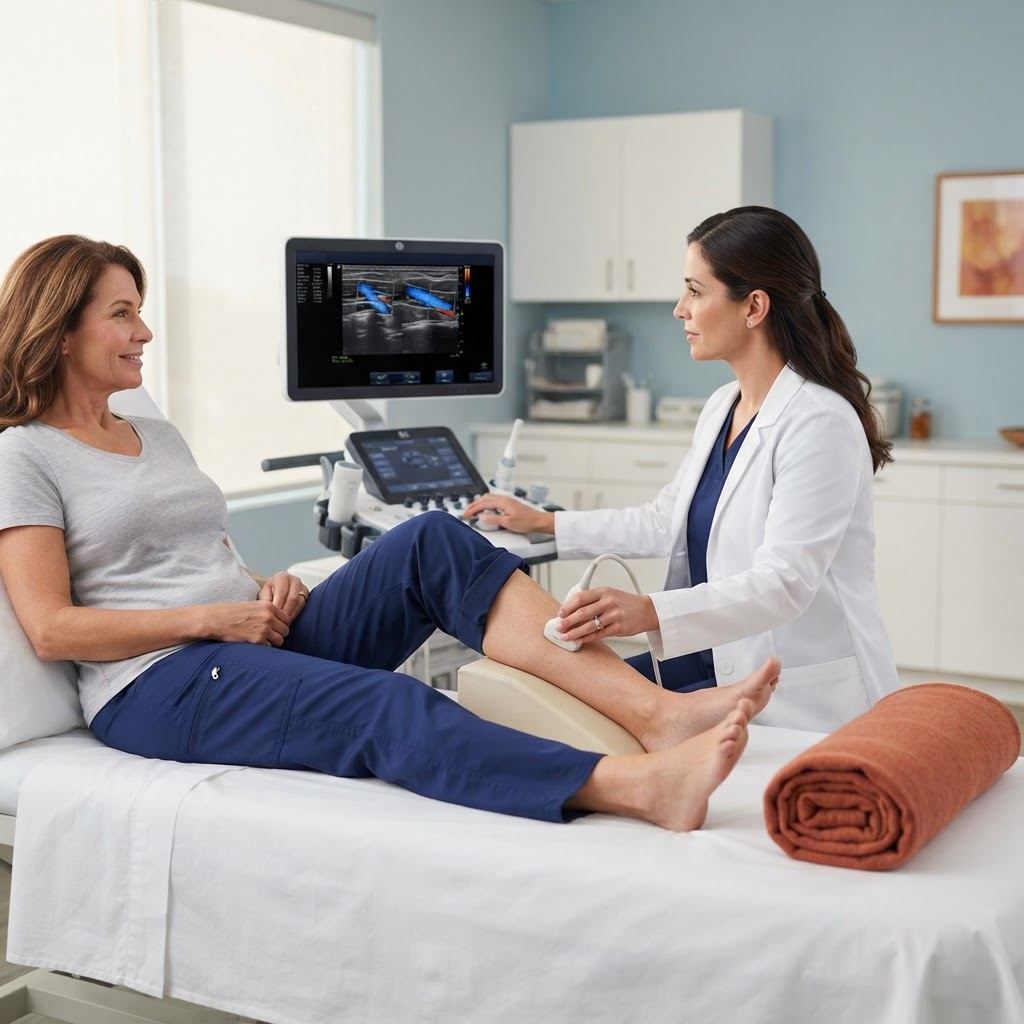
The gold standard for diagnosing CVI is the venous duplex ultrasound. This non-invasive, painless procedure uses sound waves to create images of your veins and evaluate the speed and direction of your blood flow.
- Imaging: The ultrasound provides clear visualization of the deep and superficial veins in the legs.
- Doppler Technology: This component of the scan measures the movement of blood cells, allowing the sonographer and radiologist to see if blood is leaking backward due to faulty valves (a condition called venous reflux).
Because it does not involve radiation or needles, it is a safe and highly effective diagnostic tool for mapping out vascular function.
How Imaging Guides Treatment Planning
Knowing exactly where the venous reflux is occurring is essential for treatment. Your provider will use the results of your duplex ultrasound to determine the best course of action. Treatment may range from conservative measures to minimally invasive procedures, including:
- Compression Therapy: Using medical-grade compression stockings to assist blood flow.
- Lifestyle Modifications: Elevation and exercise routines.
- Minimally Invasive Procedures: Treatments such as ablation or sclerotherapy, which are designed to close off damaged veins so that blood can be redirected to healthy vessels.
Without an accurate diagnostic order, it is difficult to determine which of these options—or if a combination—will be the most effective for your specific anatomy.
Obtaining Imaging Orders via Telehealth
In the modern healthcare landscape, you don’t always need a weeks-long wait to get the diagnostic process started. If you are struggling to secure a provider order for your imaging needs—whether because you are currently between primary care doctors, self-pay, or facing insurance barriers—Diagnostic Orders Direct offers a convenient alternative.
At Diagnostic Orders Direct, we provide $40 virtual provider reviews for diagnostic imaging, including venous duplex ultrasounds. Our licensed providers assess your symptoms to determine if an imaging order is medically appropriate. If approved, you can take that order to a local imaging facility of your choice, putting you in control of your diagnostic journey.
Taking the Next Step
Taking control of your vascular health begins with objective, high-quality data. By understanding the function of your veins through professional imaging, you can move away from guessing and toward a structured plan for leg health and comfort. If you are ready to discuss your symptoms with a professional, explore our services at Diagnostic Orders Direct.
Important Disclaimer
Diagnostic Orders Direct is not an emergency service. If you are experiencing a medical emergency, such as sudden, severe chest pain, shortness of breath, or signs of a deep vein thrombosis like a sudden, painful, and red or warm swollen calf, please call 911 or visit the nearest emergency room immediately. Diagnostic Orders Direct is not an imaging center, laboratory, or radiology service. Imaging orders are not guaranteed and are issued only when determined to be medically appropriate by a licensed provider. Our services are intended to assist patients in obtaining necessary diagnostics and are not a replacement for a comprehensive, ongoing relationship with a primary care physician.